Website Evaluation Form
Standardize how your team evaluates websites, so every assessment produces a consistent score your stakeholders can compare and act on.



When teams evaluate websites without a structured process, every reviewer does it differently, and the results can't be compared. Patterns are hard to spot and the website improvements are even harder to prioritize. Typeform's website evaluation form gives teams a consistent way to assess any site against the same criteria every time.
The form covers design and visual quality, user experience, navigation, content, mobile responsiveness, loading performance, and overall score. The form presents one question at a time, which encourages more considered responses than a full-page scoring grid. Conditional logic branches to follow-up questions when a low score is given. An evaluator who rates navigation poorly sees questions about specific pain points and recommended improvements.
Customize the criteria, rating scales, and section weights to match your evaluation goals or client requirements. Share it via direct link, assign it to your team, or include it in your audit workflow. Completed evaluations log in Google Sheets or Airtable via Zapier, so your team tracks scores across every site reviewed. Patterns that would have taken hours to spot across individual reports surface in a single filtered view.
A website evaluation form collects structured assessments of a website's design, usability, content, and technical performance. It gathers ratings across key criteria (navigation, mobile responsiveness, load time, and visual design) alongside overall scores and recommendations. It becomes the standard review record your team uses to compare and improve every site it evaluates.
Without a standard evaluation format, every reviewer prioritizes different criteria and produces assessments that can't be compared or acted on consistently. A structured form ensures every evaluator rates the same criteria, so comparisons are meaningful and priorities are defensible. Consistent evaluations also build a benchmark your team references when measuring improvement across redesigns or content updates. Use it for client website audits, competitor analysis, internal site reviews, landing page assessments, and e-commerce UX evaluations.
Cover every dimension that affects how a site performs for its users:
- Overall design and visual quality
- Navigation and information architecture
- Content clarity and relevance
- Mobile responsiveness and page load performance
- Call-to-action clarity and conversion elements
- Overall score and priority recommendations
Set up conditional logic to branch based on each score given, so low ratings trigger follow-up questions about what's broken. An evaluator who rates navigation poorly sees questions about specific pain points, broken flows, and recommended fixes. An evaluator who rates content quality poorly sees questions about tone, accuracy, and missing information instead. Your team arrives at every debrief with documented findings, not just a page of scores.
Typeform lets you send the same form to multiple evaluators and collect independent assessments from each one. Share a single link with your team and collect individual responses from each reviewer separately. Responses consolidate in Google Sheets or Airtable, so you can compare individual ratings and spot where reviewers agree or diverge. Multiple perspectives on the same site surface blind spots that a single evaluation would miss.
Get inspired by relevant templates and categories
3200+ Templates, 300+ Integrations
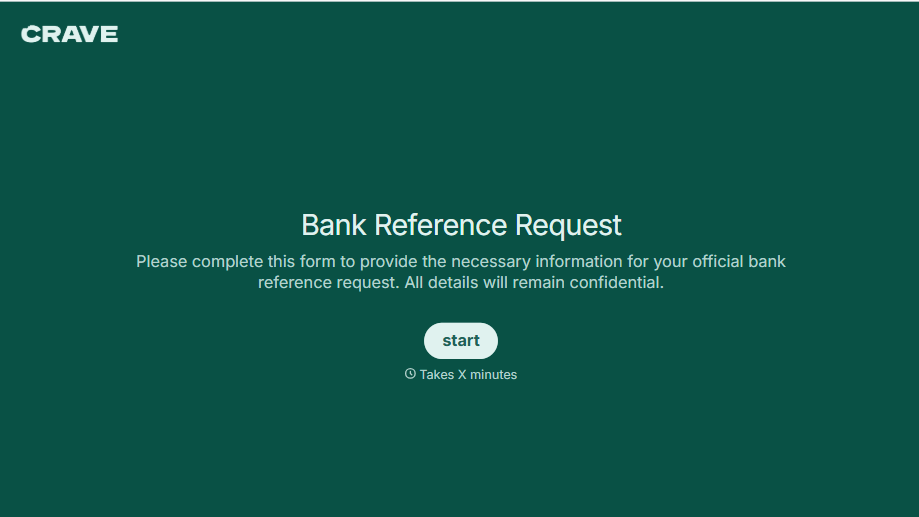
Bank Reference Form
A reference request faxed to a bank branch and left sitting in a queue for weeks isn't the kind of turnaround a landlord or business can wait on. Collect the applicant's signed authorization and the specific details you need confirmed before the request even reaches the bank, so a decision isn't stuck behind a letter that hasn't come back yet.
View template
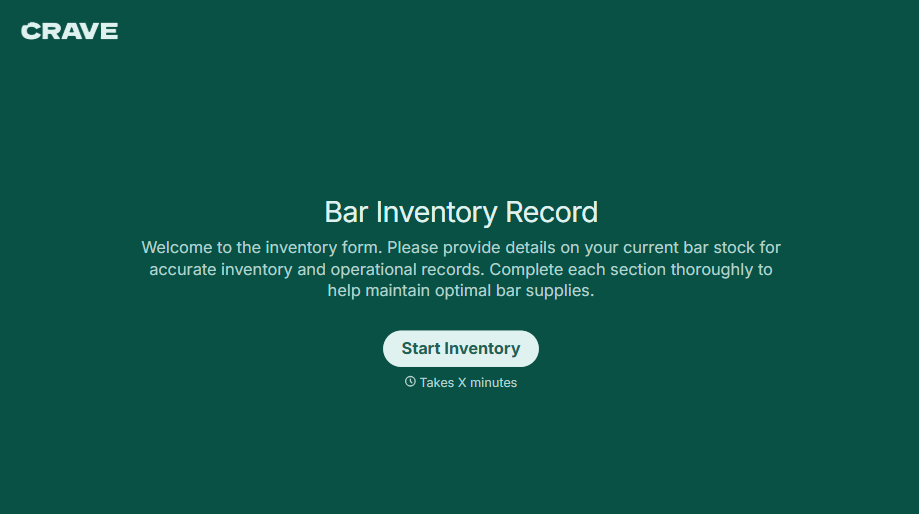
Bar Inventory Form
A bottle count eyeballed at the end of a shift and scrawled on a paper sheet doesn't hold up against a pour cost report that says something doesn't add up. Collect what your bar actually needs, item, count, and variance, on a schedule you can actually compare week to week.
View template
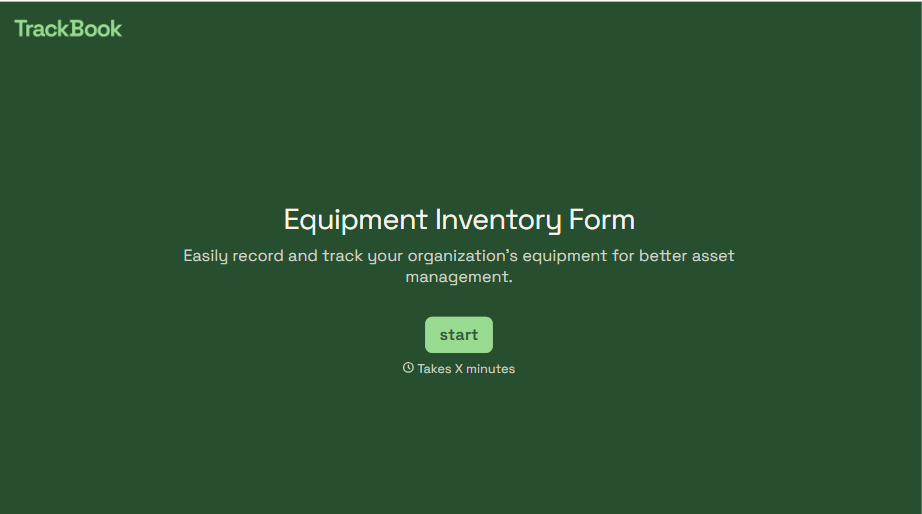
Equipment Inventory Form
Equipment that leaves a storage room in someone's arms, with no note about where it went, doesn't show up again until someone needs it and can't find it. Collect what your team actually needs, item details, condition, and who's got it, every time something moves.
View template
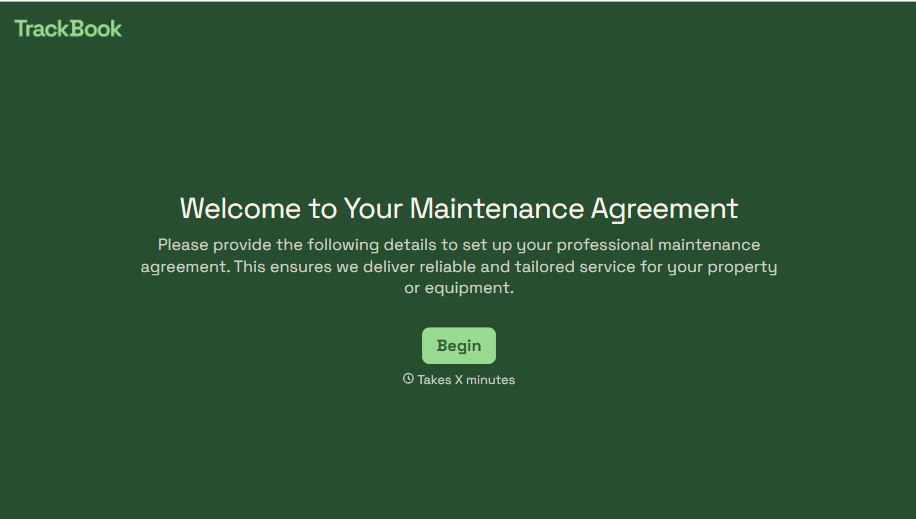
Maintenance Agreement Form
A maintenance plan agreed to over the phone isn't a contract your service team can actually work from, especially when nobody's sure whether the twice-a-year tune-up was part of the deal. Collect the equipment covered, service frequency, and a signed agreement before the first visit, so your team isn't guessing at scope once they're on-site.
View template
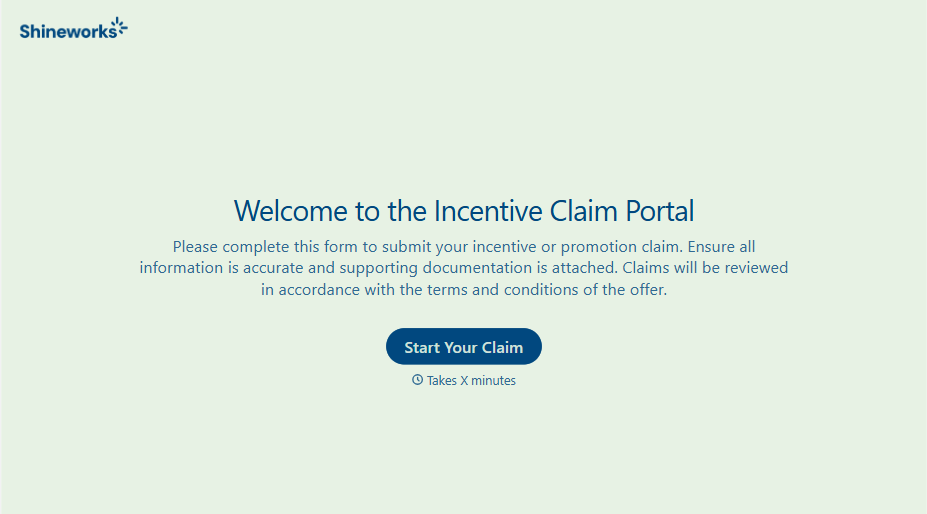
Incentive Claim Form
A rebate claim mailed in with a stapled stack of receipts isn't the kind of paperwork that gets processed quickly, especially when a required serial number turns out to be missing from page three. Collect proof of purchase, product details, and participant information upfront, so a claim doesn't bounce back for a missing document weeks later.
View template
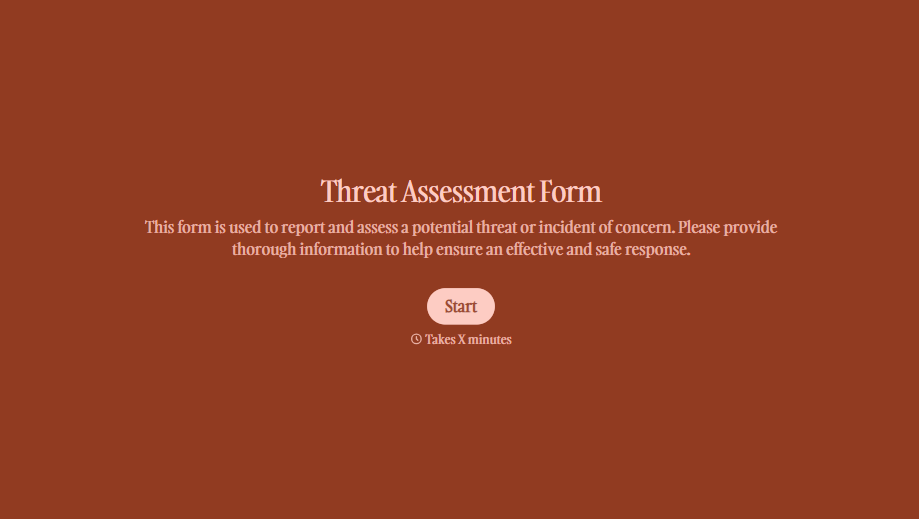
Threat Assessment Form
A concerning comment that gets passed from a teacher to a counselor to whoever's free that period loses detail with every retelling. Collect what your team actually needs, what was observed or reported, who was involved, and when, before an important detail gets dropped along the way.
View template
With Typeform, you can customize everything
Change text, colors, and even logos to match the look and feel of your brand. Then embed forms smoothly onto web and email.
Make forms feel effortless to fill out. Pace questions, call people by their name, and adapt the flow based on the data they share.
Stay efficient by connecting forms to your workflow. Typeform integrates with 300+ tools including Slack, Zapier, and HubSpot.