Basic Web Page Contact Form Template
The simplest thing on your website, and the one that matters most.



Every business needs a contact form. And yet, most of them are either a wall of 15 fields that nobody wants to complete, or a bare-minimum name-and-email box that gives you no context when someone reaches out. Neither extreme serves your visitors or your team.
This website contact form template strikes the right balance. It collects name, email, subject, and message in a clean, conversational flow that visitors actually finish. Conditional logic can add relevant fields based on the subject selected — a sales inquiry prompts for company size, while a support request asks for an order number. The one-question-at-a-time format keeps it approachable and mobile-friendly.
Embed it on your contact page in minutes. Submissions route to the right team through your email, Slack, or CRM integrations. Clean, fast, and professional — exactly what a contact form should be.
A website contact form is an embedded web form that allows visitors to send messages directly to a business through its website. It collects the sender's name, email, subject, and message, and often routes submissions to specific departments based on the nature of the inquiry. It's a fundamental element of virtually every business website.
A contact form does 3 things a listed email address can't: it structures the information you receive (so messages arrive with context, not chaos), it protects your email from spam harvesters, and it routes messages to the right team automatically. It also keeps visitors on your site instead of bouncing them to their email client, which reduces drop-off.
- Full name
- Email address
- Subject or reason for contact (dropdown for routing)
- Message body
- Optional: phone number for those who prefer a callback
- Optional: company name (useful for B2B businesses)
Layer your defenses. Use invisible CAPTCHA (reCAPTCHA v3 or similar) to block bots without annoying humans. Add a honeypot field. A hidden field that bots fill in but humans don't see. Require a minimum message length to filter auto-generated submissions. These measures stop the vast majority of spam while keeping the form frictionless for real visitors.
They serve different purposes and work best together. A contact form handles asynchronous communication. The visitor sends a message, and your team responds within a defined timeframe. Live chat handles real-time questions when someone needs an immediate answer. Use a contact form as your always-available baseline, and add live chat during business hours if your team has the capacity to staff it.
Get inspired by relevant templates and categories
3200+ Templates, 300+ Integrations
Bank Reference Form
A reference request faxed to a bank branch and left sitting in a queue for weeks isn't the kind of turnaround a landlord or business can wait on. Collect the applicant's signed authorization and the specific details you need confirmed before the request even reaches the bank, so a decision isn't stuck behind a letter that hasn't come back yet.
View template
Bar Inventory Form
A bottle count eyeballed at the end of a shift and scrawled on a paper sheet doesn't hold up against a pour cost report that says something doesn't add up. Collect what your bar actually needs, item, count, and variance, on a schedule you can actually compare week to week.
View template
Equipment Inventory Form
Equipment that leaves a storage room in someone's arms, with no note about where it went, doesn't show up again until someone needs it and can't find it. Collect what your team actually needs, item details, condition, and who's got it, every time something moves.
View template
Maintenance Agreement Form
A maintenance plan agreed to over the phone isn't a contract your service team can actually work from, especially when nobody's sure whether the twice-a-year tune-up was part of the deal. Collect the equipment covered, service frequency, and a signed agreement before the first visit, so your team isn't guessing at scope once they're on-site.
View template
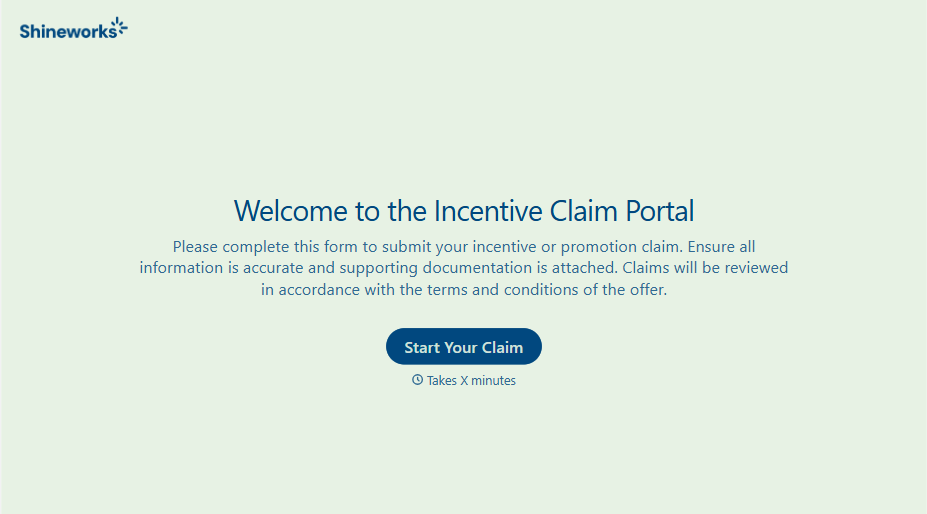
Incentive Claim Form
A rebate claim mailed in with a stapled stack of receipts isn't the kind of paperwork that gets processed quickly, especially when a required serial number turns out to be missing from page three. Collect proof of purchase, product details, and participant information upfront, so a claim doesn't bounce back for a missing document weeks later.
View template
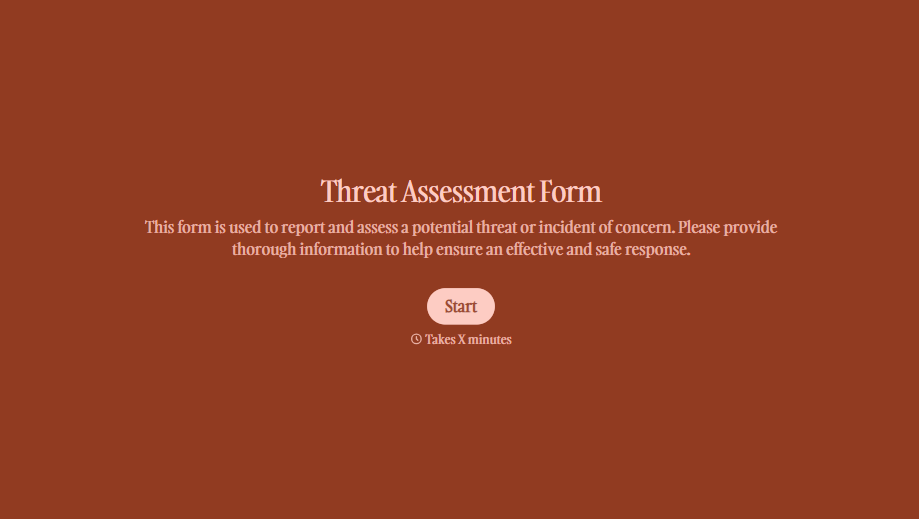
Threat Assessment Form
A concerning comment that gets passed from a teacher to a counselor to whoever's free that period loses detail with every retelling. Collect what your team actually needs, what was observed or reported, who was involved, and when, before an important detail gets dropped along the way.
View template
With Typeform, you can customize everything
Change text, colors, and even logos to match the look and feel of your brand. Then embed forms smoothly onto web and email.
Make forms feel effortless to fill out. Pace questions, call people by their name, and adapt the flow based on the data they share.
Stay efficient by connecting forms to your workflow. Typeform integrates with 300+ tools including Slack, Zapier, and HubSpot.