School Superintendent Evaluation Form
A consistent, documented evaluation process for every superintendent review.



School boards that evaluate superintendents through informal meetings or inconsistent paper forms struggle to build a defensible record. Without a structured process, evaluation outcomes are hard to justify to stakeholders, legal bodies, or the superintendent themselves. Typeform's school superintendent evaluation template gives school boards a consistent, documented way to assess performance across every review period.
The form covers leadership effectiveness, academic outcomes, financial management, community relations, staff relations, strategic planning, and communication quality. Each criterion appears on its own, keeping evaluators focused on one performance area at a time. Conditional logic surfaces comment fields when a board member submits a low rating. A below-expectations rating triggers a required explanation, so every low score comes with documented context for the record.
Customize the evaluation criteria to align with your board's specific performance standards, strategic goals, and employment policies. Distribute it to all board members via secure link, or embed it on your board's private governance platform. All evaluations log in Google Sheets or Airtable via Zapier, so your board chair aggregates scores without manual compilation. Conduct every superintendent review with the consistency and documentation your governance process requires.
A school superintendent evaluation form is a structured digital assessment used by school boards to rate superintendent performance across defined criteria. It captures numeric ratings, qualitative comments, and overall performance scores in a single, documented submission. It functions as the official record your board uses to inform employment decisions, contract renewals, and performance improvement plans.
Informal evaluations lack the documented evidence boards need to defend employment decisions to stakeholders, legal bodies, or the superintendent. A structured form ensures every board member evaluates the same criteria using the same scale, producing consistent, comparable results. It also creates a timestamped record that protects your board if an employment decision is ever challenged.
A complete superintendent evaluation covers:
- Instructional leadership and academic achievement outcomes
- Financial management and budget stewardship
- Staff recruitment, retention, and development
- Community and stakeholder relations
- Strategic planning and goal attainment
- Communication with the board and public
- Compliance with board policy and legal requirements
- Overall job performance rating
Collect individual evaluations from each board member through the same form, then export all responses to Google Sheets via Zapier. Use a summary tab to calculate average scores per criterion across all board members. Present the aggregated results to the full board before the superintendent's review meeting, so the discussion is grounded in collective data.
Most school boards conduct a formal evaluation at least once per year, typically tied to the contract renewal cycle. Many boards also run a mid-year check-in to surface issues early and give the superintendent time to course-correct. Evaluation frequency should align with your board's policies, the superintendent's contract terms, and any requirements set by your state's education authority.
Get inspired by relevant templates and categories
3200+ Templates, 300+ Integrations
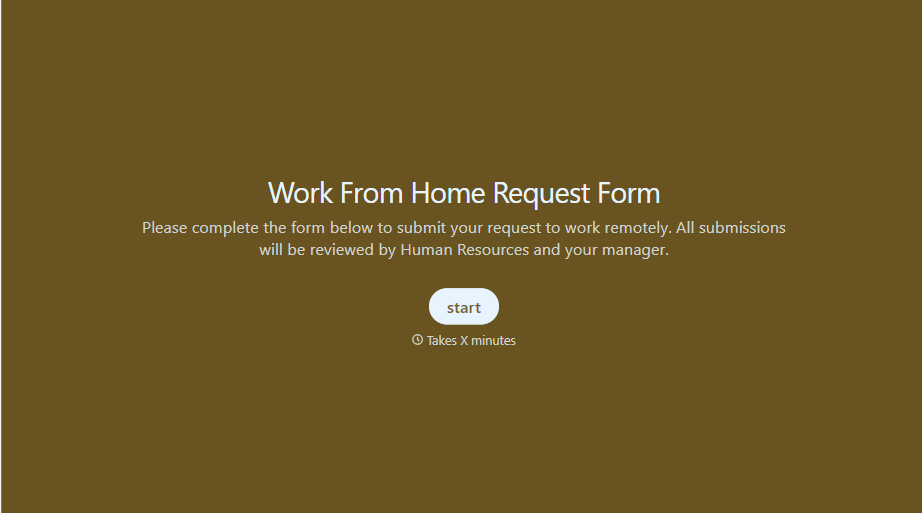
Work From Home Request Form
A Slack message asking to work from home on Thursday isn't a request anyone can track, especially once the same employee has asked five different ways over a month. Collect the request type, dates or schedule, and manager approval in one place, so HR isn't reconstructing who's working where from a scattered inbox.
View template
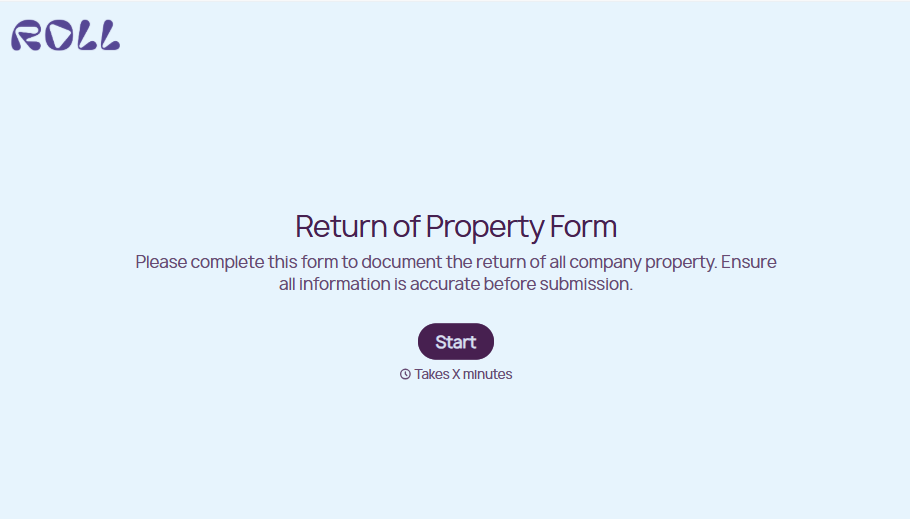
Return of Property Form
A property checklist stapled to an exit interview packet isn't a record anyone can rely on when a laptop turns up missing three weeks later. Collect itemized equipment details, condition at return, and a signed acknowledgment before an employee's last day, so IT isn't chasing down a laptop that already walked out the door.
View template
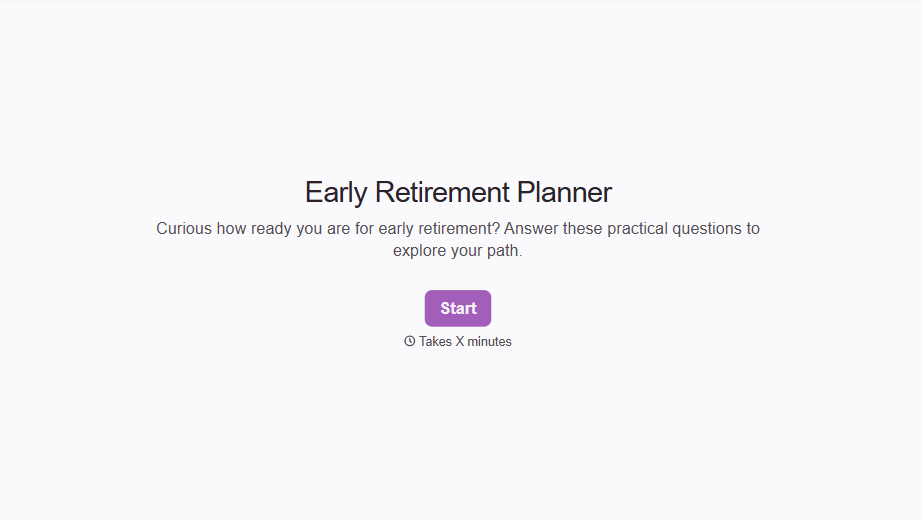
Early Retirement Form
A retirement mentioned to a manager in conversation doesn't give HR anything to actually process, and if there's an incentive deadline attached, the date that conversation happened can matter more than anyone realized at the time. Collect what your HR team actually needs, employee information, requested date, and benefit elections, before a window closes.
View template
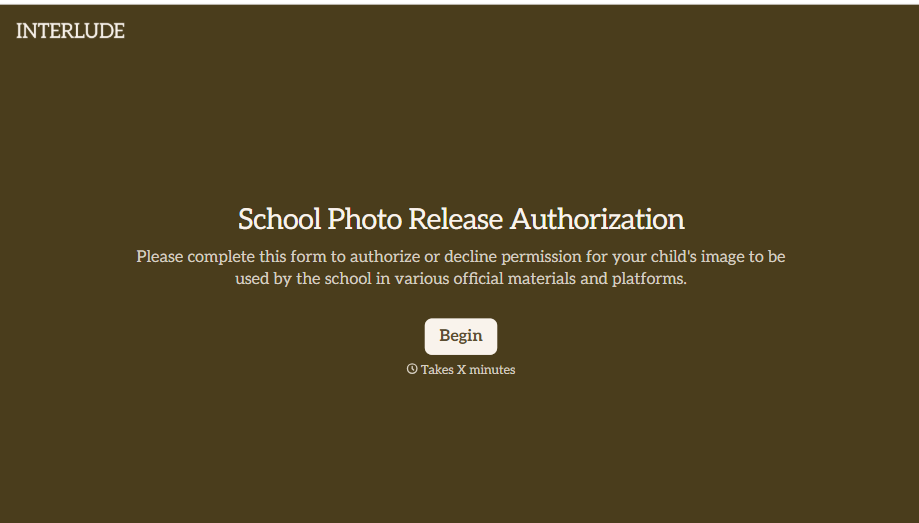
School Photo Release Form
A photo consent checkbox buried on page 12 of an enrollment packet doesn't tell a teacher who's actually opted out before they post a class photo. Collect what your school actually needs, guardian consent, and exactly where a photo can be used, before the camera comes out.
View template
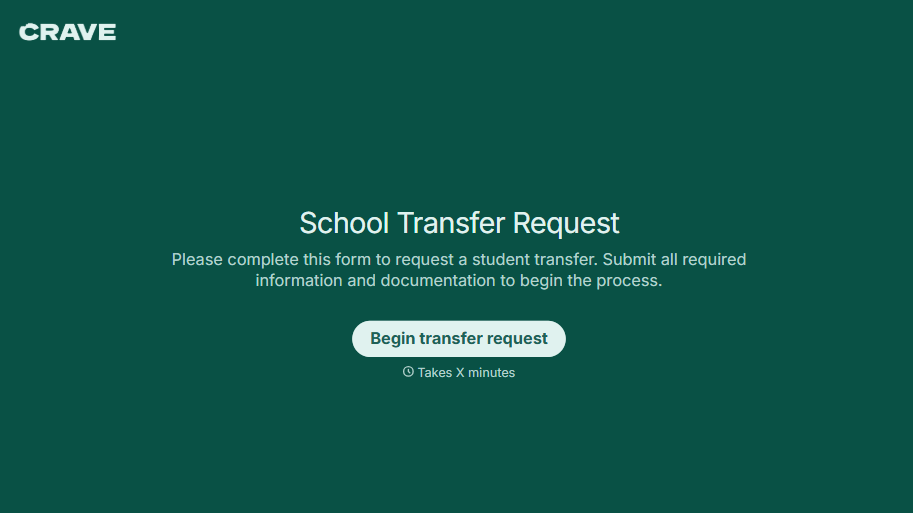
School Transfer Request Form
A transfer request dropped off at the district office isn't the kind of paperwork that gets processed before the semester it's meant for already started. Collect the student's information, reason for transfer, and supporting documentation upfront, so a request doesn't stall while the district follows up for a missing form.
View template
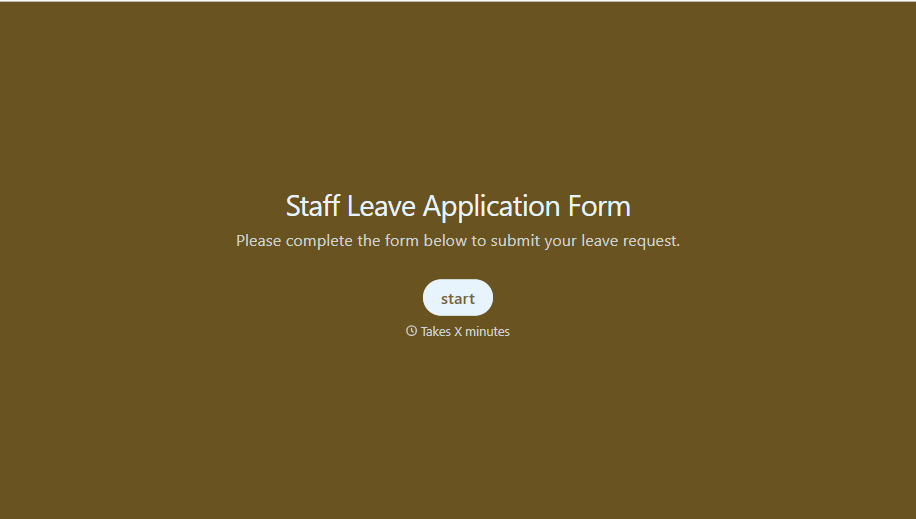
Staff Leave Application Form
A vacation request approved with a thumbs-up emoji in Slack isn't the kind of record payroll can work from when it's time to reconcile someone's leave balance. Collect the leave type, dates, and manager approval in one place, so a team doesn't accidentally double-book someone's time off.
View template
With Typeform, you can customize everything
Change text, colors, and even logos to match the look and feel of your brand. Then embed forms smoothly onto web and email.
Make forms feel effortless to fill out. Pace questions, call people by their name, and adapt the flow based on the data they share.
Stay efficient by connecting forms to your workflow. Typeform integrates with 300+ tools including Slack, Zapier, and HubSpot.