PHQ-9 Rating Scale Form
Administer the PHQ-9 digitally, score it automatically, and see how a patient's score moves between appointments. Patients complete the nine items before their visit, on their own device.



The PHQ-9 asks nine questions about how someone has been feeling over the past two weeks and turns the answers into a score from 0 to 27. One score tells you how severe things are now. A series of scores tells you whether anything is changing. Improvement in mood can be hard to track. This visit's PHQ-9 score sits on a fresh sheet, and the last one is filed somewhere behind it. Typeform's PHQ-9 rating scale form scores each response on submission and keeps them in one place, so you read this score against the last one instead of having to dig for past scores.
Patients work through the nine standard questions, rating each based on their experience in the past two weeks, and the form totals the score when they submit. The items themselves stay exactly as validated, because changing the wording would break the comparison to every other PHQ-9 ever administered. Conditional logic sits around the instrument rather than inside it, adding your own follow-up questions after the nine, or flagging a response that needs a clinician's attention right away.
You open the appointment with the score already calculated and the previous ones beside it. The conversation starts from what changed rather than from adding up a column, and a score moving in the wrong direction is hard to miss.
A PHQ-9 rating scale form is a digital version of the Patient Health Questionnaire-9, a nine-item self-report screening tool for depression symptoms. Patients rate each item over the past two weeks from 0 to 3, producing a total score between 0 and 27. Clinicians and practices use PHQ-9 rating scale forms to screen for symptoms and track severity between appointments, alongside a clinical assessment rather than in place of one.
Without one, a patient fills in a paper copy in the waiting room, a staff member adds up the column, and someone copies the total into a record. Each step invites an arithmetic slip, and the previous score usually stays buried in the file instead of sitting beside the new one. A PHQ-9 rating scale form calculates the total on submission and keeps every administration together, so the score is right and the history is visible.
Each of the nine items scores 0 to 3, giving a total between 0 and 27. The standard severity bands are:
- 0 to 4, minimal
- 5 to 9, mild
- 10 to 14, moderate
- 15 to 19, moderately severe
- 20 to 27, severe
The form calculates the total automatically, though a band is a starting point for clinical judgment, not a diagnosis.
This PHQ-9 rating scale form can flag one, but it cannot respond to one. Conditional logic can mark any submission where the ninth item indicates thoughts of self-harm and send an immediate notification to a named clinician. What no form can do is act on that at 2am when nobody is reading the inbox, so this instrument needs a live route to help alongside it: crisis line details on the ending screen, and a monitoring process on your side that matches when patients actually complete the form.
Yes. Typeform encrypts every response in transit and at rest, and meets major security standards including GDPR, SOC 2, and ISO 27001. For practices that need to meet HIPAA, a Business Associate Agreement is available on Typeform's Enterprise plan, so mental health responses stay protected from submission onward.
Get inspired by relevant templates and categories
3200+ Templates, 300+ Integrations
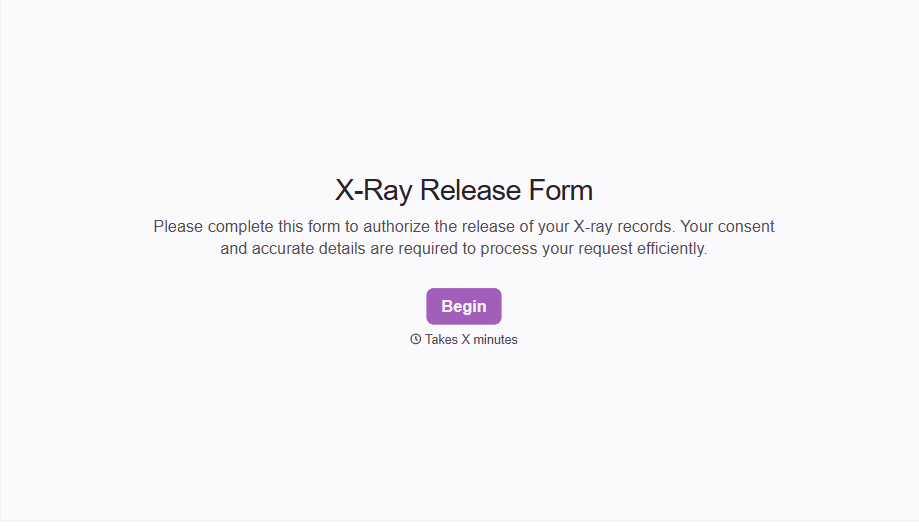
X-Ray Release Form
A phone call asking to send X-rays to a new provider isn't an authorization your compliance file can rely on. Collect patient information, the receiving provider's details, and a signed authorization before the images go out, so your front desk isn't scrambling to prove who approved a release.
View template
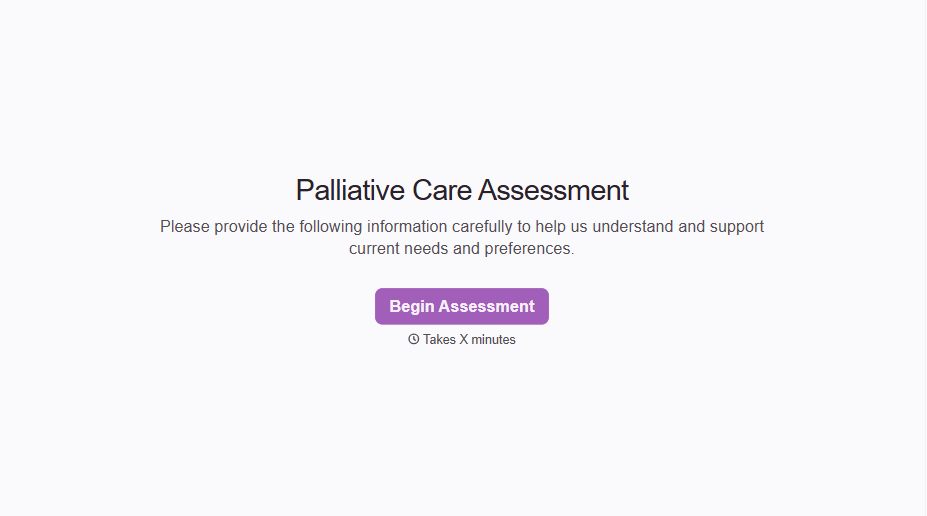
Palliative Care Assessment Form
A symptom check done verbally during a rushed home visit isn't the kind of record that shows whether pain management is actually working from one visit to the next. Collect symptom severity, functional status, and psychosocial needs consistently, so a care team can see change over time instead of relying on memory of the last visit.
View template
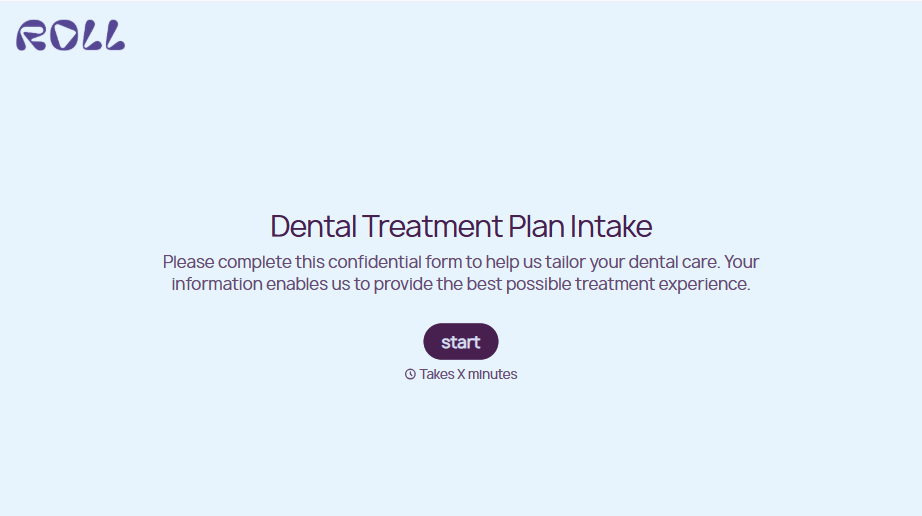
Dental Treatment Plan Form
A treatment plan explained chairside, in the few minutes right after an exam, doesn't hold up when a patient's trying to remember it at the front desk. Collect what your practice actually needs, the recommended procedures, cost estimate, and signed consent, before treatment gets scheduled.
View template
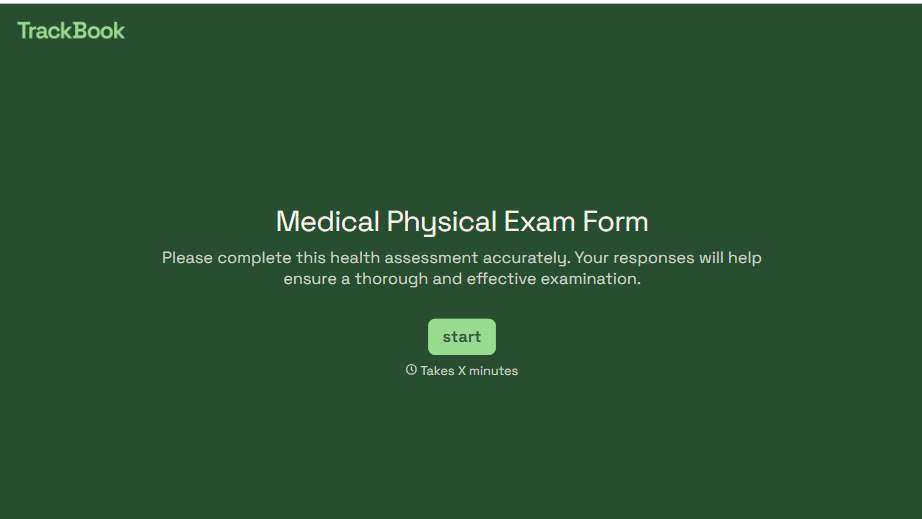
Medical Physical Exam Form
A health history filled out on a clipboard in the waiting room, minutes before being called back, isn't a history anyone fills in completely. Collect what your provider actually needs, patient information, health history, and current symptoms, before the exam starts.
View template
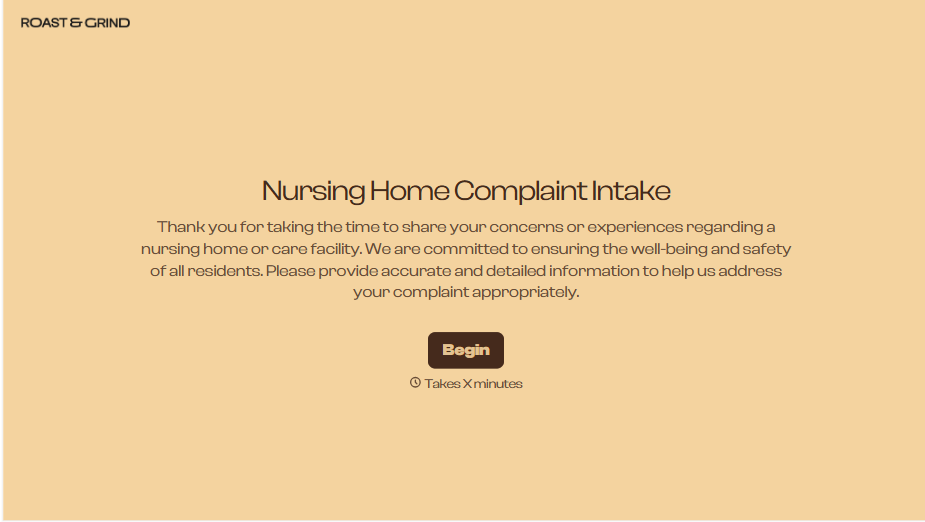
Nursing Home Complaint Form
A family member who calls the front desk about a missed medication or an unanswered call light often gets a verbal apology and nothing written down, no record that it happened, no way to tell if it's the third time this month or the first. And if what's actually being reported is abuse or neglect, a facility's own intake form isn't where that report should end, or even start.
View template
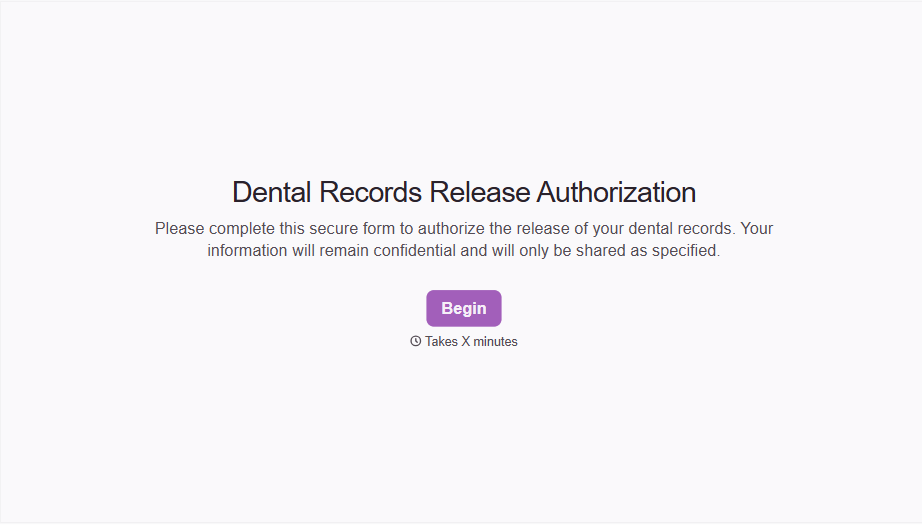
Dental Record Release Form
A release that just says "I authorize my records to be sent" doesn't say which records, sent to whom, or for how long that authorization is good, and HIPAA has a specific list of what actually has to be in there for the release to count as valid. Spell out what's being released, to whom, and until when, before the request goes out.
View template
With Typeform, you can customize everything
Change text, colors, and even logos to match the look and feel of your brand. Then embed forms smoothly onto web and email.
Make forms feel effortless to fill out. Pace questions, call people by their name, and adapt the flow based on the data they share.
Stay efficient by connecting forms to your workflow. Typeform integrates with 300+ tools including Slack, Zapier, and HubSpot.