Performance Review Form Template
Give performance reviews the structure they deserve, so the conversation is productive, not painful.


Performance reviews shouldn't feel like a surprise ambush or a box-checking exercise. But without structure, they often become one or the other: a manager improvising feedback from memory, or both parties rushing through a generic form to get it over with.
This performance review form template provides a clear framework for evaluating performance across multiple dimensions. The one-question-at-a-time format gives reviewers space to think about each area (goals met, competencies demonstrated, growth areas) without the temptation to rush through a crowded form. Conditional logic adjusts the review based on role type, department, or seniority level, so the criteria are always relevant.
Customize it for your organization's competency framework, share it with managers before review cycles, and collect structured evaluations that feed into your HR system through integrations. The result is reviews that are fair, consistent, and actually useful for employee development.
A performance review form is a structured evaluation tool that managers use to assess an employee's job performance over a specific period. It typically covers goal achievement, core competencies, strengths, areas for improvement, and development plans. The form creates a documented record of the review that benefits both the employee's growth and the organization's talent management.
Without structure, reviews are inconsistent. One manager writes a novel; another checks a few boxes. Structured forms ensure every employee is evaluated on the same criteria, which promotes fairness and reduces bias. They also make it easier to track performance trends over time, support compensation decisions with documentation, and give employees clear, actionable feedback instead of vague impressions.
- Overall performance rating for the review period
- Assessment of specific goals or objectives set at the start of the period
- Evaluation of core competencies (communication, problem-solving, collaboration, etc.)
- Key strengths and accomplishments
- Areas for improvement with specific examples
- Development goals and action plan for the next review period
Use consistent criteria for every employee in the same role. That's the most impactful step. The form structure itself helps by asking the same questions for every review, which limits the influence of recency bias or personal relationships. Include fields for specific examples rather than general impressions. You can also add a self-assessment component so the manager's perspective isn't the only voice in the process.
Yes, and this template supports it. Create a version of the form for employees to complete before the review meeting. Self-assessments surface accomplishments that managers might have missed, give employees agency in the process, and create a natural starting point for the review conversation. Comparing the self-assessment with the manager's evaluation often reveals the most productive discussion points.
Get inspired by relevant templates and categories
3200+ Templates, 300+ Integrations
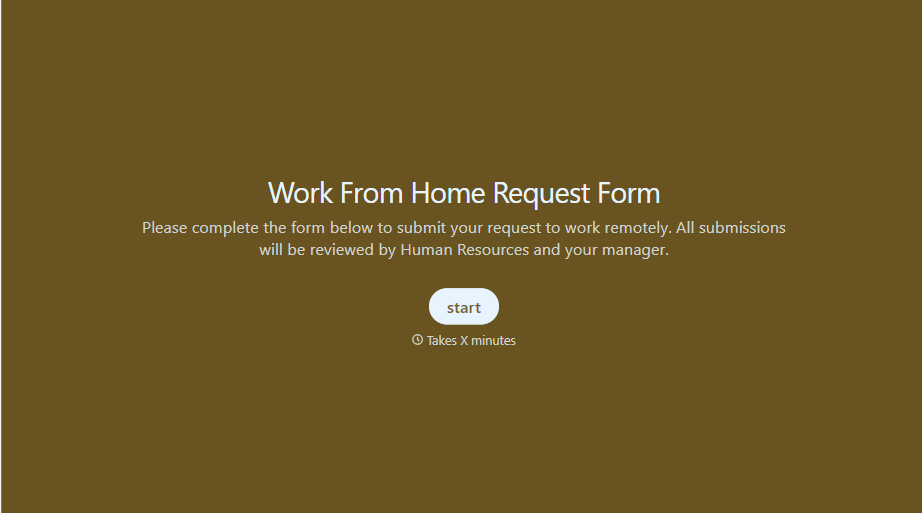
Work From Home Request Form
A Slack message asking to work from home on Thursday isn't a request anyone can track, especially once the same employee has asked five different ways over a month. Collect the request type, dates or schedule, and manager approval in one place, so HR isn't reconstructing who's working where from a scattered inbox.
View template
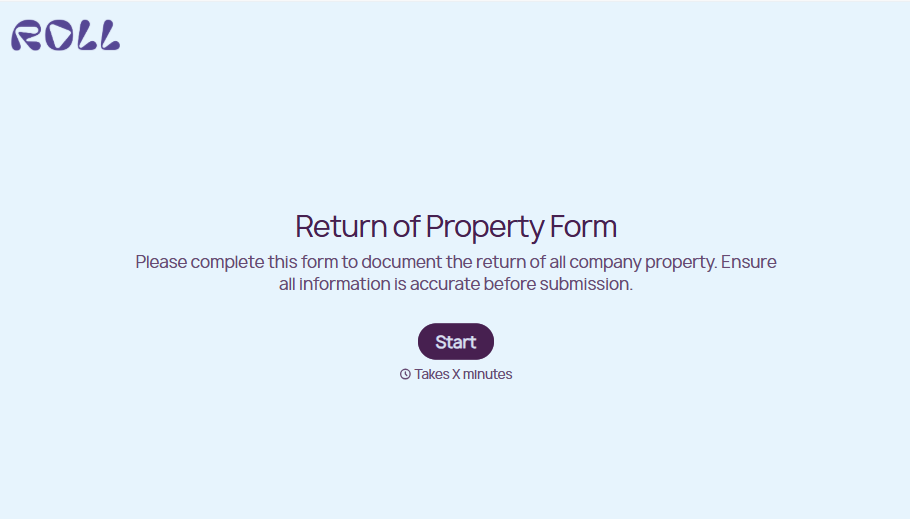
Return of Property Form
A property checklist stapled to an exit interview packet isn't a record anyone can rely on when a laptop turns up missing three weeks later. Collect itemized equipment details, condition at return, and a signed acknowledgment before an employee's last day, so IT isn't chasing down a laptop that already walked out the door.
View template
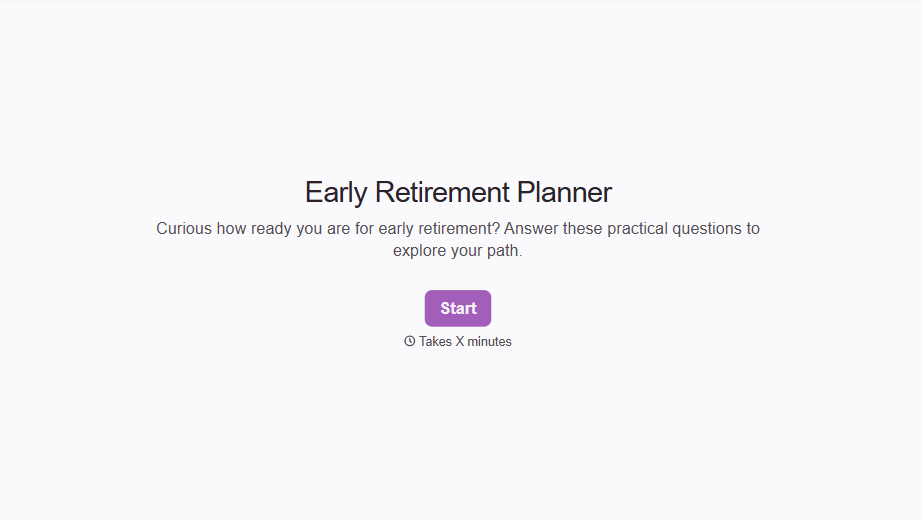
Early Retirement Form
A retirement mentioned to a manager in conversation doesn't give HR anything to actually process, and if there's an incentive deadline attached, the date that conversation happened can matter more than anyone realized at the time. Collect what your HR team actually needs, employee information, requested date, and benefit elections, before a window closes.
View template
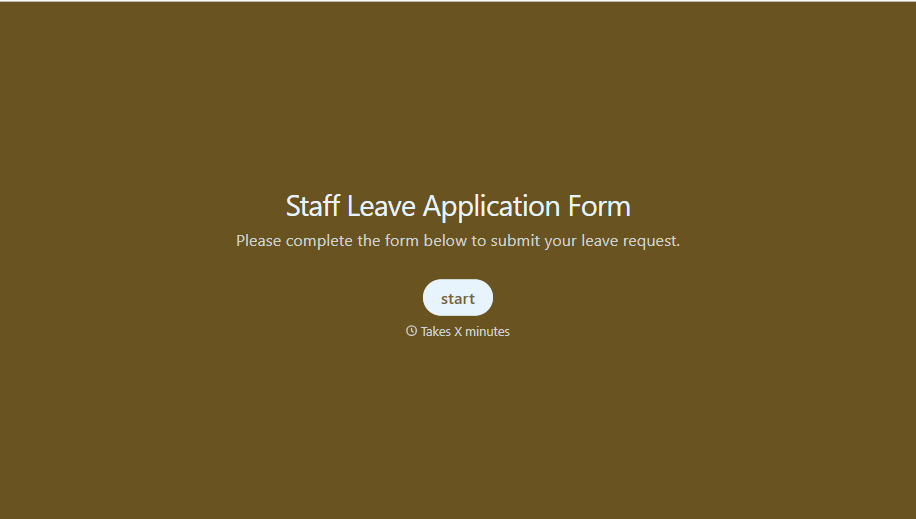
Staff Leave Application Form
A vacation request approved with a thumbs-up emoji in Slack isn't the kind of record payroll can work from when it's time to reconcile someone's leave balance. Collect the leave type, dates, and manager approval in one place, so a team doesn't accidentally double-book someone's time off.
View template
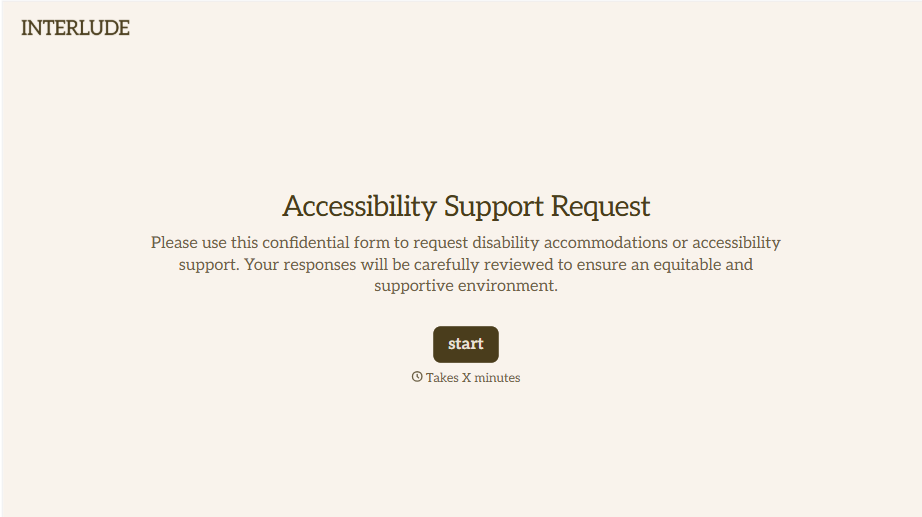
Disability Accommodation Request Form
A quiet word to a manager about needing a different desk setup isn't the kind of request that starts a documented process. Collect the specific accommodation needed and any supporting information before a decision gets made informally, so a request doesn't get lost between a hallway conversation and HR's desk.
View template
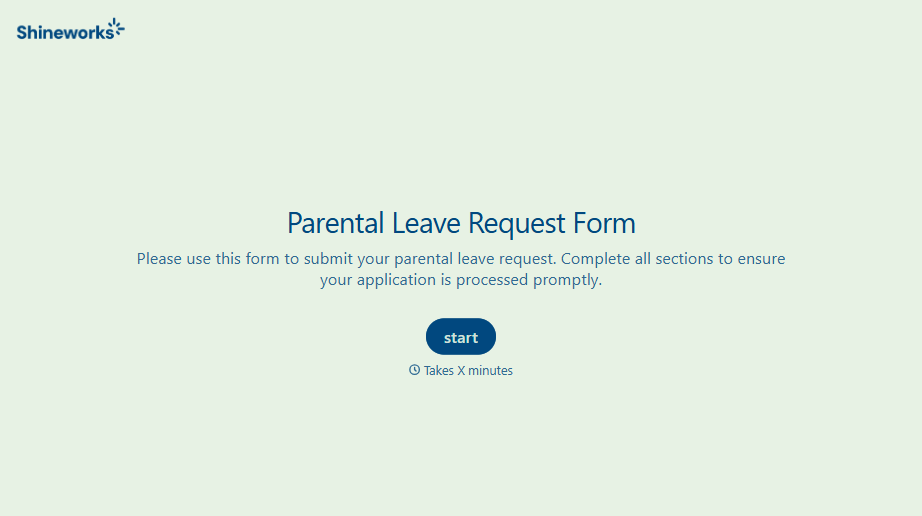
With Typeform, you can customize everything
Change text, colors, and even logos to match the look and feel of your brand. Then embed forms smoothly onto web and email.
Make forms feel effortless to fill out. Pace questions, call people by their name, and adapt the flow based on the data they share.
Stay efficient by connecting forms to your workflow. Typeform integrates with 300+ tools including Slack, Zapier, and HubSpot.