Intent to Vacate Form
Capture tenant notice in one place, so your property team prepares for turnover without chasing confirmation details.



Property managers who receive vacate notices informally spend time tracking down move-out dates, forwarding addresses, and written confirmation. Without a standardized notice process, the gap between a tenant's intention to leave and a documented confirmation delays property turnaround. Typeform's intent to vacate form gives property managers a consistent way to collect official notice details in one submission.
The form captures tenant name, unit details, notice date, intended move-out date, forwarding address, and any move-out requests. Tenants complete one question at a time, so the notice submission takes minutes rather than a trip to the office. Conditional logic adapts the notice based on the tenancy type and reason for vacating. A fixed-term tenant sees different questions than a month-to-month tenant, so the notice captures only what applies.
Customize it with your property management branding, required notice period, and any jurisdiction-specific declarations tenants must complete. Share it on your tenant portal or send it directly when a tenant indicates they plan to leave. Every submitted notice routes to your property team via Zapier, so the turnover process begins without a manual follow-up. Documented notices protect both parties: your team prepares for turnover on schedule and tenants have a record of their submission.
An intent to vacate form collects official notice from a tenant who plans to end their tenancy. It captures tenant name, unit, notice date, move-out date, reason for vacating, and forwarding address in one submission. Think of it as the formal record that confirms the tenancy end date and starts the move-out process.
Informal vacate notices create uncertainty for both the tenant and the property manager. A notice given by text or verbally isn't formal documentation and leaves the move-out date open to dispute. A structured form creates a time-stamped official record that both parties can reference throughout the move-out process. Use it for residential rentals, commercial leases, student accommodation, and any tenancy requiring a formal written notice to vacate.
A complete intent to vacate form covers:
- Tenant full name and contact details
- Property address and unit number
- Lease type (fixed-term or month-to-month)
- Date of notice submission
- Intended move-out date
- Reason for vacating (optional but useful for retention data)
- Forwarding address for bond or deposit return
- Key return and access handover details
- Outstanding maintenance or repair requests
- Acknowledgment of the required notice period
- Tenant signature and date
Use Zapier to send an automatic confirmation to the tenant and alert your property team the moment a notice lands. From there, trigger an exit inspection request, send move-out instructions, or update your vacancy calendar without manual steps. Automating the response to a notice submission reduces the time between receipt and action, keeping your turnaround on schedule.
Adjust the form to reflect the tenancy types you manage and the notice periods your local tenancy legislation requires. A short-term residential tenancy works differently from a commercial lease, so adjust your required notice period field accordingly. Add an early termination field for tenants requesting to leave before the contracted lease end date.
Get inspired by relevant templates and categories
3200+ Templates, 300+ Integrations
Bank Reference Form
A reference request faxed to a bank branch and left sitting in a queue for weeks isn't the kind of turnaround a landlord or business can wait on. Collect the applicant's signed authorization and the specific details you need confirmed before the request even reaches the bank, so a decision isn't stuck behind a letter that hasn't come back yet.
View template
Bar Inventory Form
A bottle count eyeballed at the end of a shift and scrawled on a paper sheet doesn't hold up against a pour cost report that says something doesn't add up. Collect what your bar actually needs, item, count, and variance, on a schedule you can actually compare week to week.
View template
Equipment Inventory Form
Equipment that leaves a storage room in someone's arms, with no note about where it went, doesn't show up again until someone needs it and can't find it. Collect what your team actually needs, item details, condition, and who's got it, every time something moves.
View template
Library Book Request Form
A book request scrawled on a sticky note at the front desk doesn't make it into any queue, and it definitely doesn't get anyone a call when the book actually arrives. Collect what your library actually needs, the title, patron information, and how they'd like to be notified, before the note gets buried under the next stack of returns.
View template
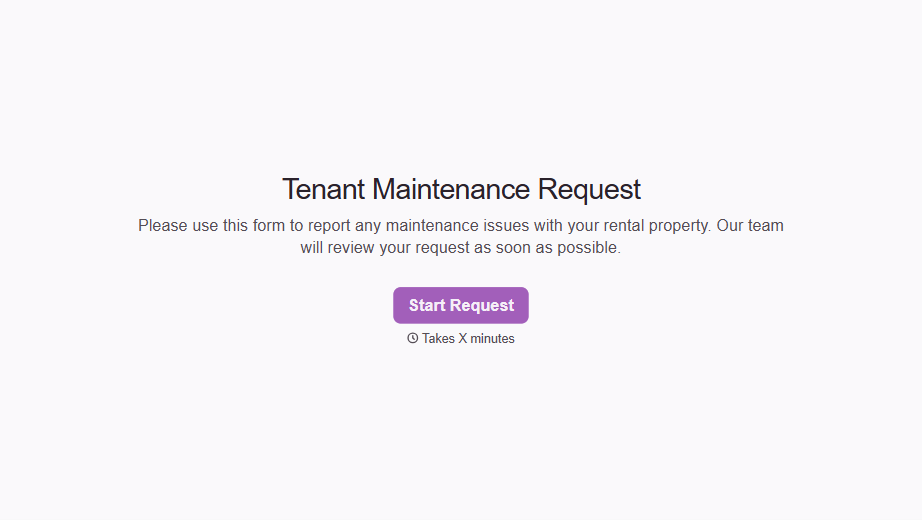
Tenant Repair Request Form
A text message about a leaky faucet sent at 11pm isn't a work order your maintenance team can act on efficiently, especially without a photo or a unit number attached. Collect the property, the issue, and how urgent it is before the request lands in someone's texts, so a repair doesn't wait on a landlord scrolling back through old messages.
View template
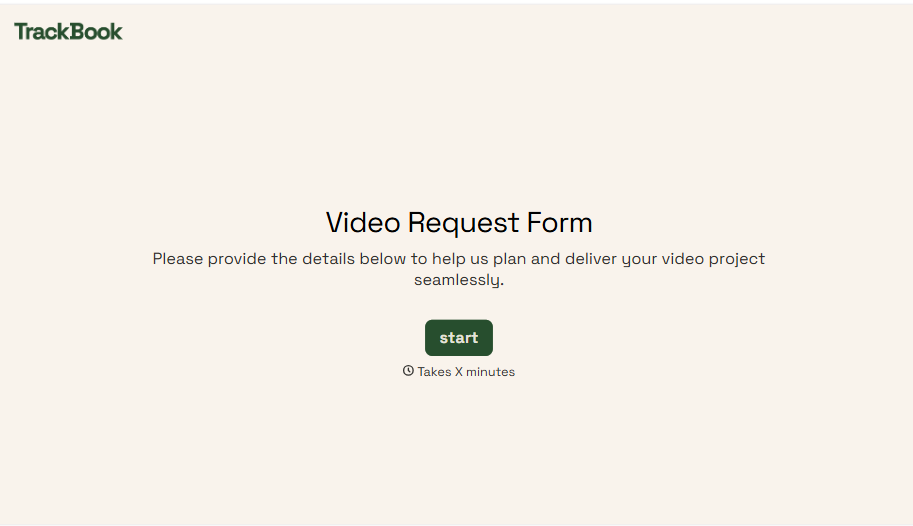
Video Request Form
A Slack message asking for "a quick video for the launch" isn't a creative brief your video team can actually start from. Collect the project purpose, deadline, and deliverable specs before the request lands in a queue, so your team isn't reworking a video built on assumptions the requester never actually stated.
View template
With Typeform, you can customize everything
Change text, colors, and even logos to match the look and feel of your brand. Then embed forms smoothly onto web and email.
Make forms feel effortless to fill out. Pace questions, call people by their name, and adapt the flow based on the data they share.
Stay efficient by connecting forms to your workflow. Typeform integrates with 300+ tools including Slack, Zapier, and HubSpot.