Hospice Referral Form
Collect every clinical and care preference detail before the first hospice contact, so intake begins without delay.



Hospice programs that rely on fax or phone referrals often begin intake without complete clinical information, which delays care. Missing clinical details or family contacts means the first hospice contact is spent gathering basics rather than planning care. Typeform's hospice referral form gives referring clinicians a structured way to document every clinical detail before intake begins.
The form captures patient demographics, primary diagnosis, current medications, functional status, advance directive status, family contacts, and care preferences. Referring clinicians work through one section at a time, documenting the patient's full situation before submitting the referral. Conditional logic adapts the referral based on the patient's primary diagnosis and the level of care being requested. A patient referred for home care follows a different documentation path than one requiring inpatient or continuous care.
Customize it with your hospice name, service areas, care levels, and any required fields your state or payer requires. Share it with referring physicians, hospital discharge teams, and palliative care units ready to transition patients to hospice. Every completed referral routes to your intake coordinator via Zapier, so the right person schedules the evaluation without delay. A complete referral at the point of transition means less time gathering details, and more time focused on the patient.
A hospice referral form collects the clinical and personal information a hospice team needs to begin intake and evaluation. It captures patient demographics, primary diagnosis, medications, functional status, advance directive status, family contacts, and care preferences. Use it to give the hospice intake team complete clinical information from the moment the referral arrives, without a follow-up call to gather missing details.
Early hospice enrollment improves patient comfort, reduces emergency visits, and gives families more time to access support services. Incomplete referrals delay enrollment, which can mean patients and families miss weeks of hospice care they're entitled to receive. A structured referral form ensures the hospice team receives complete information from the moment the referral arrives. Use it for referring patients from hospitals, skilled nursing facilities, home health programs, outpatient practices, and primary care settings.
Gather everything needed for a complete hospice intake referral:
- Patient full name, date of birth, and contact details
- Primary diagnosis and relevant secondary diagnoses
- Current prognosis and anticipated trajectory
- Attending physician name and contact details
- Current medications and allergies
- Functional status (Karnofsky or FAST score, if applicable)
- Advance directive status (DNR, POLST, living will)
- Previous hospitalizations or recent emergency visits
- Insurance or Medicare/Medicaid information
- Emergency contact and primary caregiver name and relationship
- Family support structure relevant to care planning
- Patient and family's care goals and preferences
- Preferred language and any communication or accessibility needs
Hospice referral forms contain protected health information, so collection, storage, and transmission must comply with HIPAA. Restrict access to authorized clinical staff and confirm your data processing agreement is in place before collecting patient information. Discuss data handling with your compliance team before using Typeform to collect referral information within a clinical workflow.
Use Zapier to route each referral to the intake coordinator responsible for the patient's location and care level. Home care referrals route to a different coordinator than inpatient referrals, so the right clinician receives each one immediately. Routing keeps intake organized when your program serves multiple service areas or care levels simultaneously.
Get inspired by relevant templates and categories
3200+ Templates, 300+ Integrations
Bank Reference Form
A reference request faxed to a bank branch and left sitting in a queue for weeks isn't the kind of turnaround a landlord or business can wait on. Collect the applicant's signed authorization and the specific details you need confirmed before the request even reaches the bank, so a decision isn't stuck behind a letter that hasn't come back yet.
View template
X-Ray Release Form
A phone call asking to send X-rays to a new provider isn't an authorization your compliance file can rely on. Collect patient information, the receiving provider's details, and a signed authorization before the images go out, so your front desk isn't scrambling to prove who approved a release.
View template
Bar Inventory Form
A bottle count eyeballed at the end of a shift and scrawled on a paper sheet doesn't hold up against a pour cost report that says something doesn't add up. Collect what your bar actually needs, item, count, and variance, on a schedule you can actually compare week to week.
View template
Equipment Inventory Form
Equipment that leaves a storage room in someone's arms, with no note about where it went, doesn't show up again until someone needs it and can't find it. Collect what your team actually needs, item details, condition, and who's got it, every time something moves.
View template
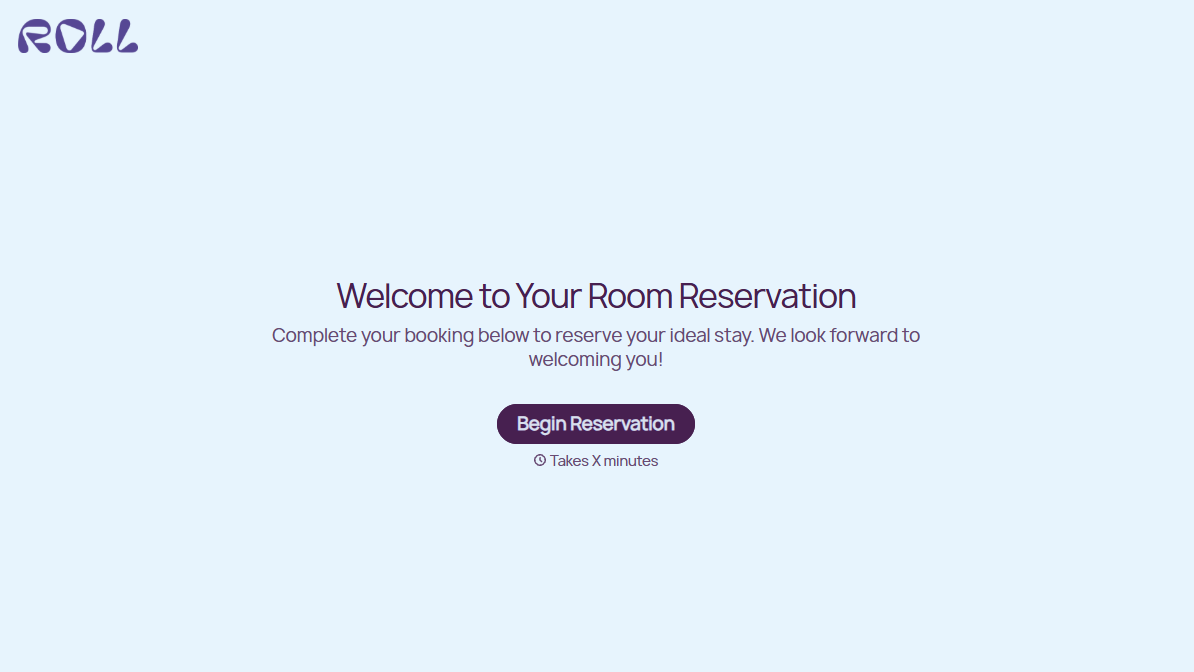
Hotel Room Booking Form
A room booked over the phone with "we'll figure out the room type when you get here" doesn't leave the front desk anything to actually plan around. Collect what your hotel actually needs, guest information, dates, and room preferences, before the reservation gets confirmed.
View template
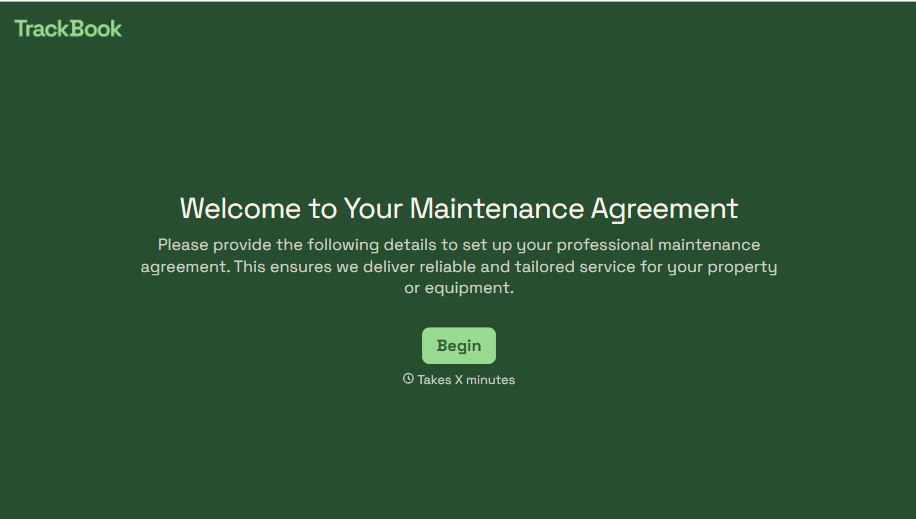
Maintenance Agreement Form
A maintenance plan agreed to over the phone isn't a contract your service team can actually work from, especially when nobody's sure whether the twice-a-year tune-up was part of the deal. Collect the equipment covered, service frequency, and a signed agreement before the first visit, so your team isn't guessing at scope once they're on-site.
View template
With Typeform, you can customize everything
Change text, colors, and even logos to match the look and feel of your brand. Then embed forms smoothly onto web and email.
Make forms feel effortless to fill out. Pace questions, call people by their name, and adapt the flow based on the data they share.
Stay efficient by connecting forms to your workflow. Typeform integrates with 300+ tools including Slack, Zapier, and HubSpot.