Healthcare employee satisfaction survey template
Hear how your clinical and support staff are really doing before burnout turns into a resignation letter. Collect honest, anonymous feedback on workload, staffing, and support across every unit.



In a hospital, the nurse working short-staffed shifts and the tech skipping breaks rarely tell leadership how close they are to leaving. There's no time in the shift to raise it, and speaking up can feel risky in a strict hierarchy. So the strain stays invisible until it manifests as multiple resignations, leaving a unit to suddenly scramble to cover the gap. Typeform's healthcare employee satisfaction survey gives every staff member an anonymous way to say how they're really doing, while there's still time to respond.
Staff rate their workload, staffing levels, and the support they get from management, and say whether they see themselves staying. A nurse who flags unsafe staffing gets asked which shifts and how often, while one who's satisfied is asked what's keeping them there. Every response stays anonymous but sorted by unit and role, so patterns show up without exposing anyone.
Across a department, the individual answers add up to a clear read on where morale is holding and where it's cracking: which units are burning out, which managers support their teams, and which gaps keep coming up. You act on the early signs of burnout and turnover while you can still change them, instead of reading about issues in an exit interview.
A healthcare employee satisfaction survey is a questionnaire that asks clinical and support staff how they feel about their work, their workload, and their workplace. It captures their sense of staffing levels, management support, burnout, and whether they plan to stay. Hospitals, clinics, and care providers use these surveys to catch morale and retention problems while there's still time to act on them.
Without a healthcare employee satisfaction survey, leadership usually learns how staff feel only when they resign, long after the workload or short-staffing became unbearable. On a busy unit, no one has time to raise concerns in the moment, and a rigid hierarchy makes speaking up feel risky. A healthcare employee satisfaction survey gives staff a safe, standing channel to be honest, so leadership sees the strain building and addresses it sooner rather than later.
Capture what keeps staff there:
- Workload and hours
- Staffing levels and safety
- Support from management
- Burnout and wellbeing
- Intent to stay
Yes. You can collect responses without any names or identifying details, so staff can be honest about staffing, management, or burnout without worrying it traces back to them. In healthcare, where speaking up can feel risky, that anonymity is often the difference between the polite answer and the real one. You still see results grouped by unit or role, so the patterns are clear without exposing anyone.
Run the survey on a regular cadence—quarterly for most teams—so you track how morale shifts instead of catching a single snapshot. Conditions in healthcare change fast with staffing and patient loads, so pair it with a short pulse after major changes like a unit restructure or a stretch of understaffing. Regular check-ins also show staff their feedback is an ongoing conversation, not a once-a-year formality.
Get inspired by relevant templates and categories
3200+ Templates, 300+ Integrations
Remote Work Survey Form
A remote work survey that asks "How satisfied are you, 1 to 10?" once a year and getting the same safe "8" from everyone isn't measuring how remote work is actually going, it's measuring how safe people feel giving an honest answer. Ask about the actual friction, equipment, communication, isolation, and make it genuinely anonymous.
View template
Beck Depression Inventory (BDI) Questionnaire Form
By the time a paper Beck Depression Inventory (BDI) gets scored by hand and filed in a chart, the moment to act on an elevated result may have already passed. Score responses the moment they come in, flag anything that needs immediate attention, and route the result to the right person before the appointment ends.
View template
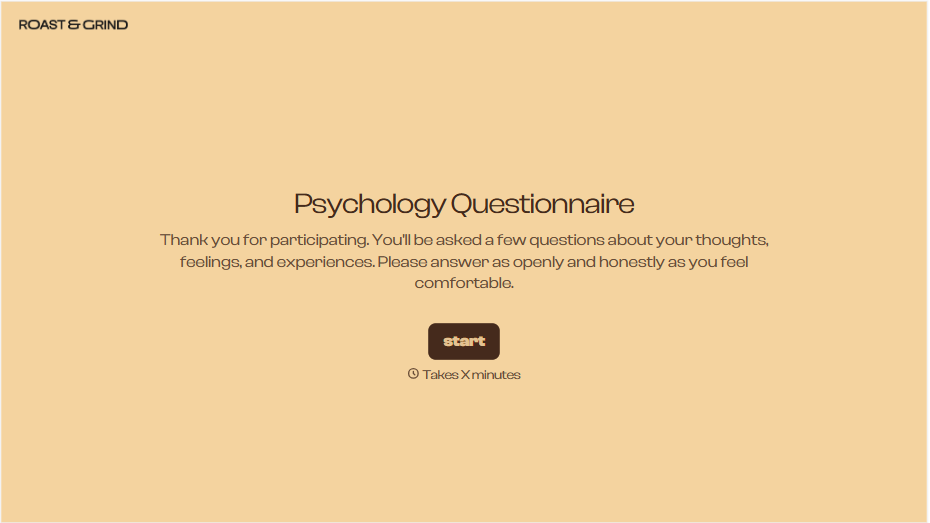

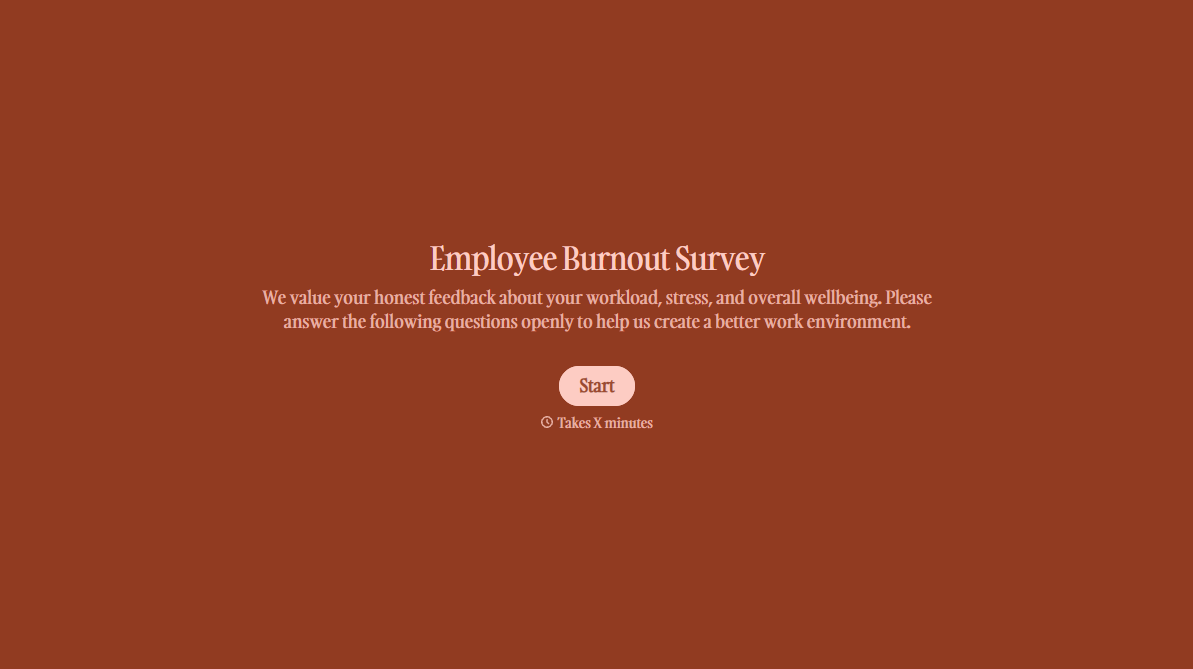
With Typeform, you can customize everything
Change text, colors, and even logos to match the look and feel of your brand. Then embed forms smoothly onto web and email.
Make forms feel effortless to fill out. Pace questions, call people by their name, and adapt the flow based on the data they share.
Stay efficient by connecting forms to your workflow. Typeform integrates with 300+ tools including Slack, Zapier, and HubSpot.