Health Declaration Form Template
Screen for health risks quickly without making it feel like an interrogation.



Whether you're running a workplace, hosting an event, managing a school, or operating a healthcare facility, health declarations have become a standard part of daily operations. But nobody wants to fill out a clunky form every time they walk through the door. If the process is slow, invasive, or confusing, people rush through it, and inaccurate declarations defeat the entire purpose.
This health declaration form template makes the screening process fast, clear, and mobile-friendly. Typeform's one-question-at-a-time format keeps each question focused, reducing errors and rushed responses. Conditional logic means someone who reports no symptoms breezes through in under a minute, while someone flagging a concern sees targeted follow-up questions, like recent travel history or exposure contacts.
Customize the questions for your specific health protocols, connect submissions to your tracking system through integrations, and set up instant alerts when a response requires attention.
A health declaration form is a self-reported screening tool where individuals attest to their current health status — typically confirming the absence of symptoms, recent exposures, or recent travel to high-risk areas. It's used by employers, schools, event organizers, healthcare facilities, and travel operators to identify potential health risks before granting access to a shared space or service.
Paper health declarations are slow to fill out, impossible to analyze at scale, and a pain to store. A digital form processes in seconds, automatically flags concerning responses, feeds data into tracking systems, and creates a timestamped, searchable archive. During outbreaks or incidents, the ability to quickly search and analyze past declarations is invaluable. Speed and accuracy both improve when pen and paper are removed from the equation.
- Current symptoms checklist (fever, cough, fatigue, etc.)
- Recent close contact with confirmed cases
- Travel history to high-risk areas within a defined period
- Current isolation or quarantine status
- Vaccination or testing status (if applicable to your protocol)
- Confirmation of truthfulness with a digital signature or checkbox
Define your protocol before the situation arises and communicate it clearly in the form. When a respondent flags symptoms or exposures, conditional logic can show immediate instructions. "Do not enter the premises. Contact [name] at [number]." On the backend, an integration triggers an instant notification to your health and safety coordinator. The goal is a compassionate, clear response that protects both the individual and the group.
Retention periods depend on your jurisdiction and industry regulations. Many workplace safety guidelines recommend retaining health screening records for at least 3 years. During active health emergencies, you may need them for contact tracing for at least 30 days. Consult your legal and compliance team to determine the appropriate retention period, and make sure your storage method complies with applicable privacy laws.
Get inspired by relevant templates and categories
3200+ Templates, 300+ Integrations
Bank Reference Form
A reference request faxed to a bank branch and left sitting in a queue for weeks isn't the kind of turnaround a landlord or business can wait on. Collect the applicant's signed authorization and the specific details you need confirmed before the request even reaches the bank, so a decision isn't stuck behind a letter that hasn't come back yet.
View template
X-Ray Release Form
A phone call asking to send X-rays to a new provider isn't an authorization your compliance file can rely on. Collect patient information, the receiving provider's details, and a signed authorization before the images go out, so your front desk isn't scrambling to prove who approved a release.
View template
Bar Inventory Form
A bottle count eyeballed at the end of a shift and scrawled on a paper sheet doesn't hold up against a pour cost report that says something doesn't add up. Collect what your bar actually needs, item, count, and variance, on a schedule you can actually compare week to week.
View template
Equipment Inventory Form
Equipment that leaves a storage room in someone's arms, with no note about where it went, doesn't show up again until someone needs it and can't find it. Collect what your team actually needs, item details, condition, and who's got it, every time something moves.
View template
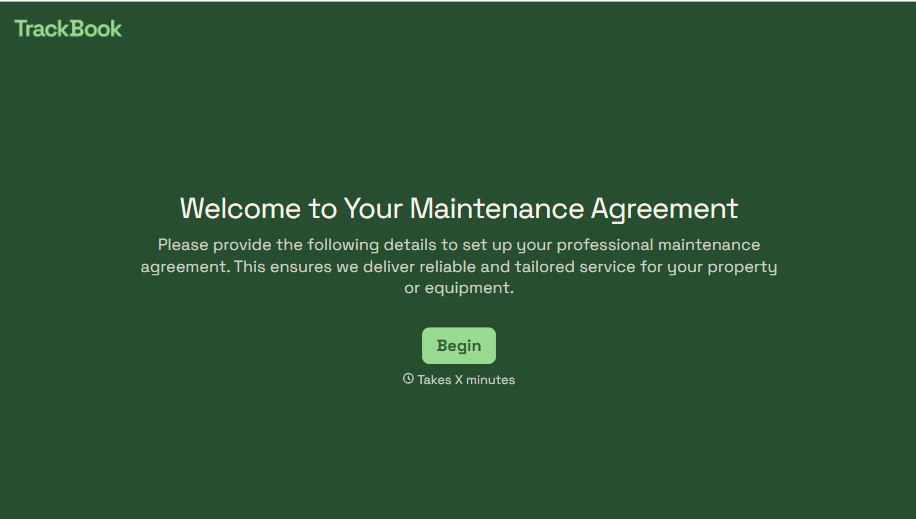
Maintenance Agreement Form
A maintenance plan agreed to over the phone isn't a contract your service team can actually work from, especially when nobody's sure whether the twice-a-year tune-up was part of the deal. Collect the equipment covered, service frequency, and a signed agreement before the first visit, so your team isn't guessing at scope once they're on-site.
View template
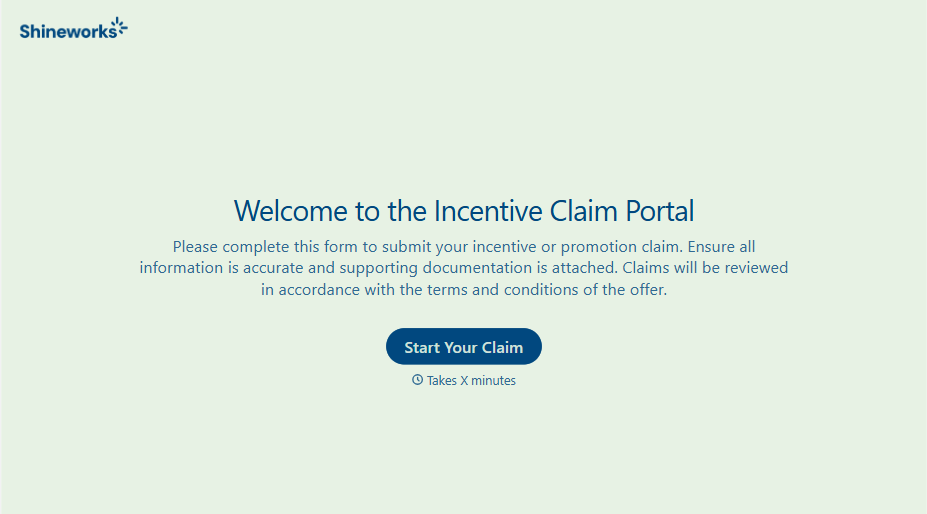
Incentive Claim Form
A rebate claim mailed in with a stapled stack of receipts isn't the kind of paperwork that gets processed quickly, especially when a required serial number turns out to be missing from page three. Collect proof of purchase, product details, and participant information upfront, so a claim doesn't bounce back for a missing document weeks later.
View template
With Typeform, you can customize everything
Change text, colors, and even logos to match the look and feel of your brand. Then embed forms smoothly onto web and email.
Make forms feel effortless to fill out. Pace questions, call people by their name, and adapt the flow based on the data they share.
Stay efficient by connecting forms to your workflow. Typeform integrates with 300+ tools including Slack, Zapier, and HubSpot.