Communication Style Survey Form
Most communication problems aren't about what's said. Find out how each person prefers to communicate before the misunderstandings arise.



Team misalignments often have nothing to do with ability and everything to do with how people prefer to communicate. Without that insight, managers misjudge disengagement and design workflows that work for one person and frustrate the rest. Typeform's communication style survey template gives managers a consistent way to understand each person's communication preferences and challenges.
The survey covers preferred channels, feedback styles, conflict habits, and what each person finds most frustrating about team communication. Typeform breaks the form into one question at a time, so respondents can focus on each answer without distraction. Conditional logic tailors the experience based on each person's responses. Someone who prefers async communication sees different follow-up questions than someone who relies on in-person conversation, keeping responses precise.
Customize the survey to match your team's size, tools, and specific communication challenges. Send it during onboarding, share it ahead of a team offsite, or distribute it when a new manager joins. Responses feed into Google Sheets or Airtable via Zapier, giving managers a clear view of each person's communication profile. Build a team that communicates well on purpose, not by accident.
A communication style survey form is a structured digital questionnaire that captures how individuals prefer to communicate, give and receive feedback, handle disagreement, and engage with their team. It collects information on preferred channels (email, messaging, phone, in-person), meeting preferences, feedback sensitivity, conflict habits, and when each person does their best thinking. It functions as a communication map for managers and teammates — replacing assumptions with documented, individual preferences.
Most communication friction in teams isn't intentional—it happens because people default to the style that works for them and assume it works for everyone else. A communication style survey surfaces those differences before they become a source of conflict or disengagement. Managers who understand each person's preferences can run more effective meetings, deliver feedback in the style that lands best, and design workflows that match how their team actually operates. Use it for new team onboarding, manager transitions, team retreats, conflict resolution initiatives, and performance review preparation.
A communication style survey typically covers:
- Preferred channels for different types of messages
- Response time expectations and availability norms
- Feedback preferences (direct, written, private vs. group)
- Conflict approach (address immediately, reflect first, avoid until resolved)
- Meeting preferences (frequency, format, pre-reading expectations)
- When and how they do their best focused work
- What frustrates them most about team communication
Share a summary of each team member's communication preferences with the full team so everyone understands how their colleagues like to operate, not just the manager. Use the results to redesign recurring meetings around the formats most of the team finds effective, and set explicit norms around response times and channel use based on what the survey revealed. For one-on-ones, use each person's stated feedback preferences to guide how you structure performance conversations so the feedback actually gets heard.
Send it during onboarding so new hires' communication preferences are documented before misunderstandings have a chance to build. Run it again after a team restructure, when a new manager joins, or when the team shifts to a new working model (remote, hybrid, in-person). Communication preferences shift as people grow into their roles and take on more responsibility, so revisiting the survey annually keeps your team's norms grounded in how people actually work today.
Get inspired by relevant templates and categories
3200+ Templates, 300+ Integrations
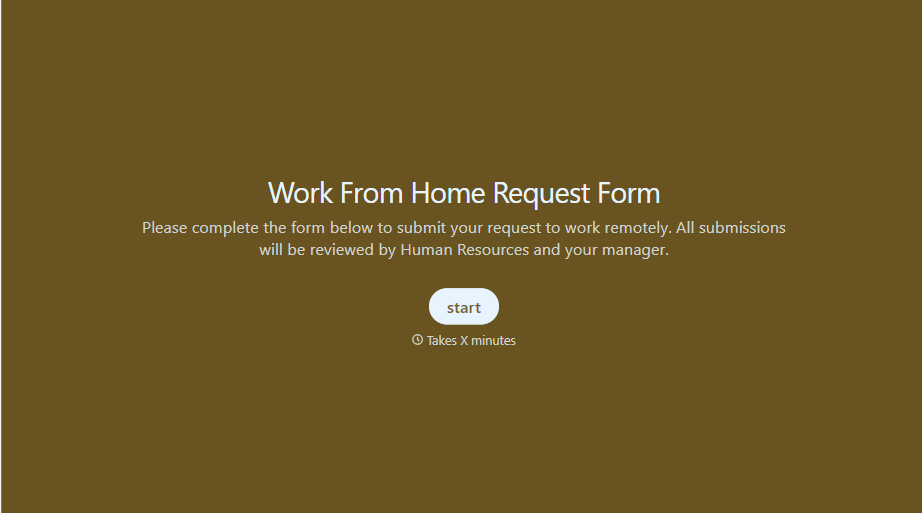
Work From Home Request Form
A Slack message asking to work from home on Thursday isn't a request anyone can track, especially once the same employee has asked five different ways over a month. Collect the request type, dates or schedule, and manager approval in one place, so HR isn't reconstructing who's working where from a scattered inbox.
View template
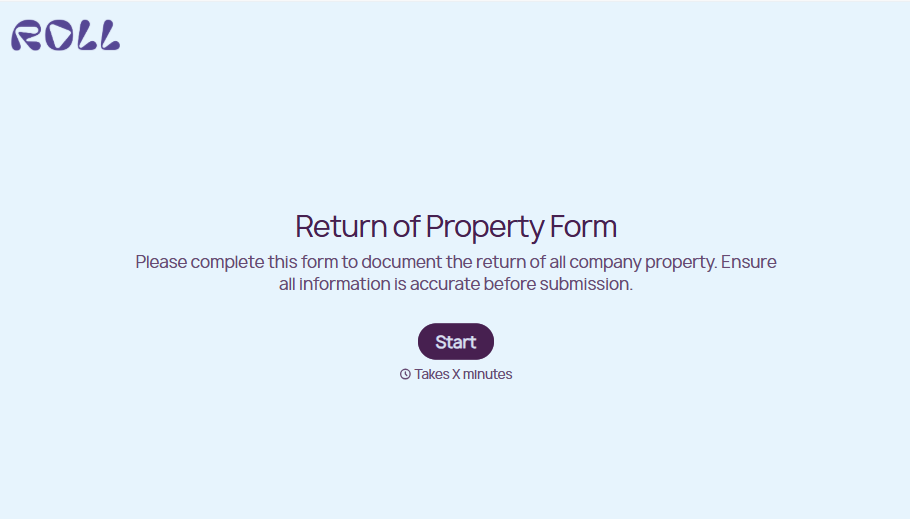
Return of Property Form
A property checklist stapled to an exit interview packet isn't a record anyone can rely on when a laptop turns up missing three weeks later. Collect itemized equipment details, condition at return, and a signed acknowledgment before an employee's last day, so IT isn't chasing down a laptop that already walked out the door.
View template
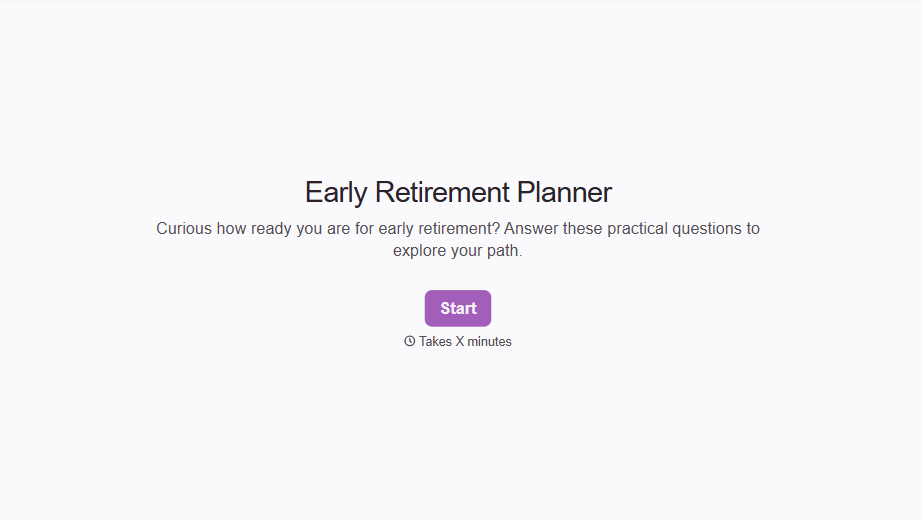
Early Retirement Form
A retirement mentioned to a manager in conversation doesn't give HR anything to actually process, and if there's an incentive deadline attached, the date that conversation happened can matter more than anyone realized at the time. Collect what your HR team actually needs, employee information, requested date, and benefit elections, before a window closes.
View template
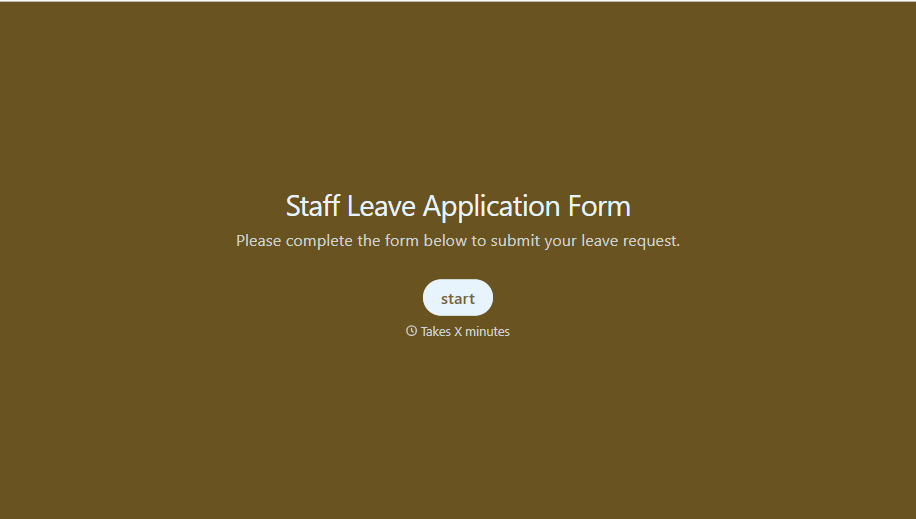
Staff Leave Application Form
A vacation request approved with a thumbs-up emoji in Slack isn't the kind of record payroll can work from when it's time to reconcile someone's leave balance. Collect the leave type, dates, and manager approval in one place, so a team doesn't accidentally double-book someone's time off.
View template
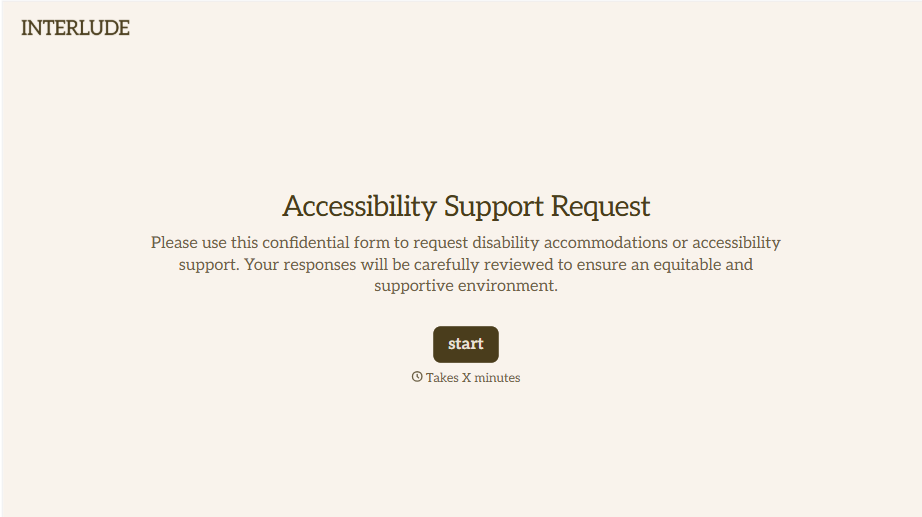
Disability Accommodation Request Form
A quiet word to a manager about needing a different desk setup isn't the kind of request that starts a documented process. Collect the specific accommodation needed and any supporting information before a decision gets made informally, so a request doesn't get lost between a hallway conversation and HR's desk.
View template
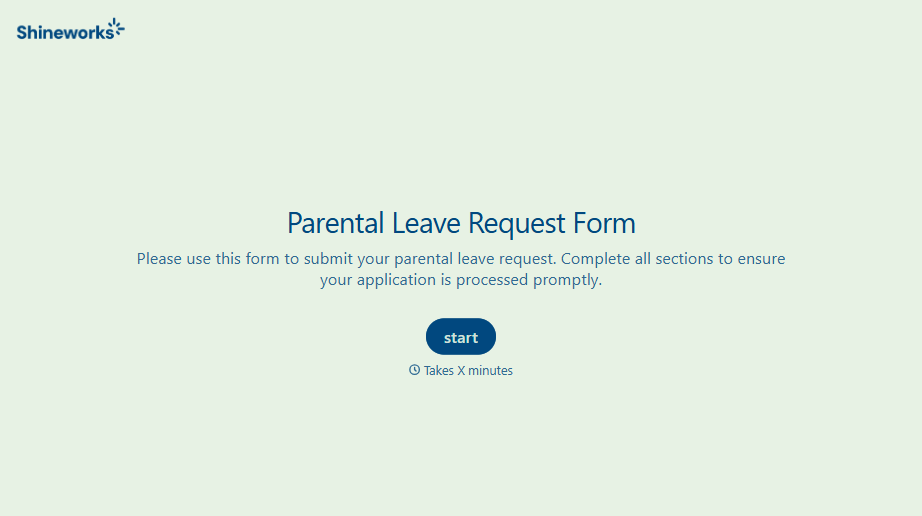
With Typeform, you can customize everything
Change text, colors, and even logos to match the look and feel of your brand. Then embed forms smoothly onto web and email.
Make forms feel effortless to fill out. Pace questions, call people by their name, and adapt the flow based on the data they share.
Stay efficient by connecting forms to your workflow. Typeform integrates with 300+ tools including Slack, Zapier, and HubSpot.